
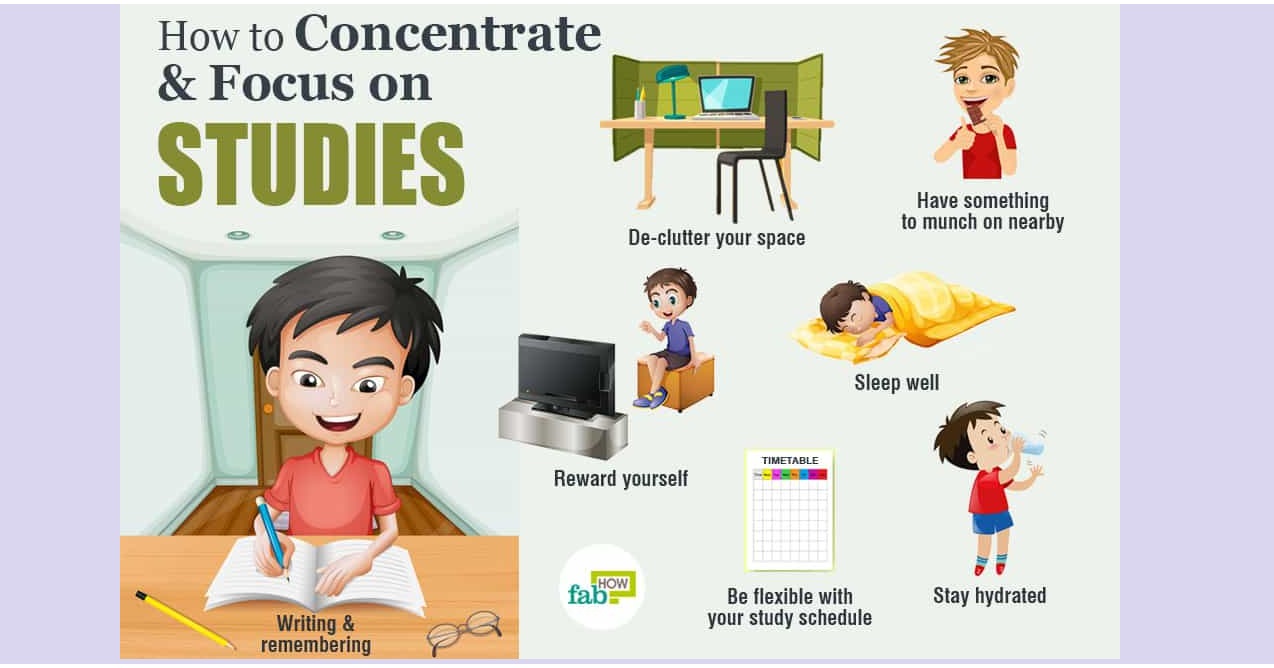
Studying for an exam, completing an assignment, or learning a difficult subject can be challenging when your mind keeps wandering. You may sit with your books for hours but still feel that very little has been learned. If you are searching for how to concentrate on studies, the solution is usually not to study for longer hours. It is to create better study conditions, reduce distractions, and use a study method that matches your attention span.
Concentration is affected by several factors, including sleep, stress, hunger, digital distractions, the study environment, and the way you organize your work. The good news is that concentration can be improved through simple, consistent habits.
Why Is It Difficult to Concentrate While Studying?
Before trying different techniques, understand why your attention keeps moving away from your studies.
Common reasons include:
- Constant phone notifications and social media
- Lack of sleep or an irregular sleep schedule
- Studying without a clear goal
- Trying to study for several hours without breaks
- Stress about exams or personal problems
- A noisy or uncomfortable environment
- Hunger or dehydration
- Multitasking between studying, messaging, videos, and other activities
Trying to eliminate every distraction is unrealistic, but reducing the biggest ones can make studying much easier.
1. Set a Small and Specific Study Goal
One of the easiest ways to improve concentration is to decide exactly what you want to accomplish before opening your book.
Instead of saying, “I will study mathematics,” create a specific target such as:
“I will solve 15 algebra questions in the next 40 minutes.”
A specific target gives your brain a clear task. It also makes it easier to measure your progress.
For each study session, choose one or two realistic goals. Avoid creating an enormous list that makes studying feel overwhelming.
2. Keep Your Phone Away
For many students, the smartphone is one of the biggest sources of distraction. A single notification can turn a short study break into 20 minutes of scrolling.
Before starting:
- Put your phone on silent or Do Not Disturb.
- Turn off unnecessary notifications.
- Keep the phone in another room or inside your bag.
- Log out of distracting social media accounts.
- Use website or app blockers if necessary.
If you need your phone for educational material, keep only the required app or website open and disable unrelated notifications.
3. Choose the Right Study Environment
Your study environment can strongly influence how easily you focus. A quiet corner of your home, library, or another low-distraction location can work well.
Keep your study area simple. Ideally, have only the things you need for the current task:
- Books
- Notebook
- Pens
- Laptop, if required
- Water bottle
- Calculator, when necessary
A cluttered desk can make it easier to become distracted. If your bedroom makes you sleepy, try studying somewhere else.
4. Try the Pomodoro Technique
If sitting for two or three hours feels impossible, don’t force yourself to do it.
The Pomodoro Technique divides study time into focused periods followed by short breaks. A common starting point is 25 minutes of focused study followed by a 5-minute break. After several cycles, you can take a longer break.
For example:
25 minutes: Study
5 minutes: Break
25 minutes: Study
5 minutes: Break
25 minutes: Study
15–30 minutes: Longer break
You can adjust the timing according to your needs. If 25 minutes feels too short, try 40 or 50 minutes of focused work followed by a 10-minute break.
The important part is to focus on one task during the study period.
5. Stop Multitasking
Many students believe they are being productive when they switch between studying, YouTube, WhatsApp, music, and social media. In reality, constantly switching attention can make focused learning harder.
Try single-tasking instead.
If you are studying biology, study biology. If you are solving mathematics, focus on mathematics. Finish a small section before moving to something else.
Focused learning gives you more opportunity to process information deeply instead of repeatedly shifting your attention.
6. Take Proper Breaks
Studying continuously for hours is not necessarily the best way to concentrate. Planned breaks can help restore attention and energy.
During a short break, try:
- Stretching
- Walking around
- Drinking water
- Getting some fresh air
- Closing your eyes for a few minutes
- Having a light snack
Try not to turn every five-minute break into a long social-media session. Your break should help your mind recover, not introduce another major distraction.
7. Use Active Study Methods
Simply reading the same page repeatedly can become boring, especially when the material is difficult.
Instead, interact with what you are learning.
Try:
- Making your own notes
- Solving practice questions
- Creating flashcards
- Explaining a topic aloud
- Making mind maps
- Testing yourself without looking at the answer
- Teaching a concept to someone else
Using your own words and practicing recall can make study sessions more active and meaningful.
For example, after reading a chapter, close the book and ask yourself:
“What are the three most important things I just learned?”
If you cannot answer, review that section rather than simply moving forward.
8. Study Difficult Subjects When Your Mind Is Fresh
Don’t automatically leave your hardest subject for the end of the day.
If you are most alert in the morning, use that time for difficult topics. If you concentrate better in the evening, schedule challenging work then.
Your personal energy pattern matters. The goal is to place demanding tasks during the periods when you can give them your best attention.
9. Get Enough Sleep
Sleep should not be treated as wasted study time. Poor sleep can contribute to difficulty concentrating and feeling mentally tired.
Instead of staying awake all night before an exam, try to maintain a consistent sleep schedule. A rested mind is generally better prepared for focused learning than an exhausted one.
Also pay attention to your basic needs. Staying hydrated, eating regular nutritious meals, and getting some physical activity can support overall energy and concentration.
10. Make a Realistic Daily Study Schedule
A study schedule gives your day structure and reduces the time you spend deciding what to study next.
For example:
8:00–8:45 AM: Mathematics
9:00–9:45 AM: Computer Science
11:00–11:45 AM: English
4:00–4:45 PM: Revision
7:00–7:30 PM: Practice questions
You don’t need to copy this schedule exactly. Create one based on your classes, responsibilities, energy levels, and exam dates.
More importantly, start small. Building a consistent routine is usually more practical than suddenly deciding to study for 10 hours every day. Good study habits include realistic goals, spaced study sessions, practice tests, breaks, and taking care of yourself.
11. Use Music Carefully
Some students find background music helpful, while others become distracted by it. If music helps you, consider quiet instrumental music or neutral background sounds.
Songs with strong lyrics may compete with reading or other language-heavy tasks for some people. Research and individual responses vary, so experiment and keep whichever approach helps you stay focused.
12. Don’t Wait for Motivation
One common mistake is waiting until you “feel like studying.”
Motivation changes from day to day. A better approach is to create a small starting ritual.
For example:
- Clean your desk.
- Put your phone away.
- Open the required book.
- Write one specific goal.
- Set a timer for 25 minutes.
- Start with the easiest first step.
You don’t need to feel highly motivated to begin. Starting can make it easier to continue.
A Simple 30-Minute Concentration Routine
If you frequently lose focus, try this routine today:
Minute 0–2: Put your phone away and prepare your materials.
Minute 2–5: Decide exactly what you will complete.
Minute 5–25: Study one topic without multitasking.
Minute 25–30: Take a break, stretch, and drink water.
After 30 minutes: Repeat if you still have energy.
Once this becomes comfortable, gradually increase your focused study periods.
Top Google Searches Related to “How to Concentrate on Studies”
People searching for ways to improve their study concentration may also search for:
- How to concentrate on studies
- How to focus on studies without getting distracted
- How to concentrate on studies for long hours
- How to improve concentration while studying
- How to focus on studies at home
- How to concentrate on studies without getting sleepy
- How to study with full concentration
- How to focus on studies without getting distracted by phone
- How to concentrate on studies during exams
- How to improve focus and concentration for students
- How to study for long hours effectively
- How to stop feeling sleepy while studying
- How to increase concentration power for studying
- How to focus on studies at night
- How to concentrate on studies in less time
Frequently Asked Questions
How can I concentrate on studies without getting distracted?
Start by removing your biggest distractions. Keep your phone away, choose a quiet study location, set one specific goal, and study in a timed block. Avoid multitasking and take planned breaks instead of waiting until you are completely exhausted.
How can I concentrate on studies for long hours?
Don’t try to jump directly into extremely long study sessions. Start with manageable focused blocks, such as 25–50 minutes, followed by short breaks. Gradually increase your study time as your concentration improves. Regular breaks can help maintain attention and energy.
How can I concentrate on studies at home?
Create a dedicated study area with minimal distractions. Keep your phone away, tell family members when you need uninterrupted time, prepare your materials before starting, and follow a simple schedule.
Why can’t I concentrate while studying?
Difficulty concentrating can have many possible causes, including tiredness, stress, poor sleep, distractions, hunger, and other physical or psychological factors. If concentration problems persist or interfere significantly with your daily life despite improving your study habits, consider speaking with a qualified healthcare professional.
Is the Pomodoro Technique good for studying?
The Pomodoro Technique can be useful because it creates a defined period for focused work followed by a planned break. However, there is no single timing schedule that works for everyone. You can adjust the length of your study and break periods according to your concentration and the type of work you are doing.
How can I concentrate on studies at night?
Study in a well-lit, comfortable environment and avoid studying in bed if it makes you sleepy. Keep your phone away and choose shorter focused sessions. If you are extremely tired, getting adequate sleep may be more useful than forcing yourself to continue studying.
What should I do if I lose concentration after 10 minutes?
Don’t assume that you are incapable of concentrating. Start with a smaller target. Try focusing for 10–15 minutes, take a short break, and repeat. As this becomes easier, gradually increase your focused study time.
Final Thoughts
Learning how to concentrate on studies is less about forcing yourself to sit with a book for endless hours and more about creating conditions that make focused learning easier. Reduce distractions, set clear goals, use active learning methods, take intentional breaks, protect your sleep, and build a realistic routine.
Most importantly, don’t try to change everything in one day. Pick two or three strategies and practice them consistently. Over time, better study habits can make your sessions more focused, organized, and productiv